IFTTT vs Splunk
IFTTT and Splunk solve completely different problems. IFTTT automates simple tasks between apps. Splunk analyzes massive amounts of data for security and performance. You're likely choosing based on your core need.
방대한 연결성, 하지만 신뢰할 수 없는 성능.
IFTTT의 방대한 서비스 카탈로그 연결에 대한 기술적 강점과 가정 및 비즈니스 사용자를 위한 강력한 자동화 잠재력은 인정합니다. 그러나 상당한 사용자 보고서에 따르면 가격 책정 구조가 매우 공격적으로 변하는 동안 안정성이 크게 저하되었습니다. 전반적으로, 우리는 높은 비용과 예측 불가능한 성능으로 인해 중요한 자동화에 의존하기 어렵다고 판단합니다.
장점
- 900개 이상의 다양한 서비스 및 앱을 연결하는 방대한 생태계.
- 기본 자동화 요구 사항 테스트를 위한 영구 무료 요금제 제공.
- Pro 티어는 웹훅 및 필터 코드와 같은 고급 개발자 기능을 제공합니다.
- 단일 트리거에서 복잡한 워크플로를 허용하는 멀티 액션 앱릿.
단점
- 심각하고 잦은 신뢰성 문제; 앱릿이 지연되거나 활성화되지 않는 경우가 많음.
- 공격적인 가격 책정 모델 및 무료 요금제 기능의 지속적인 축소.
- 고객 지원이 응답성이 떨어지고 엄격한 환불 불가 정책을 고수하는 것으로 보고됨.
- 변동하는 기능 제한으로 인해 사용자들이 신뢰도가 낮다고 표현함.
Powerful but complex data platform.
We find Splunk offers a robust, unified platform for security and observability with extensive integrations and scalability. However, its pricing structure is opaque and usage-based, which can make cost planning challenging. Overall, it's a strong choice for enterprises needing deep data analysis, but smaller teams may find it complex and expensive.
장점
- Unified platform for security and observability.
- Over 2,000 integrations with various data sources.
- AI and automation for threat response.
- Handles massive data volumes at scale.
단점
- Opaque pricing requires consultation with sales.
- Can be complex to set up and learn.
- Usage-based models may lead to unpredictable costs.
- External review access was blocked, limiting user sentiment data.
소개IFTTT
IFTTT는 비즈니스와 가정 생활 전반에 걸쳐 강력한 자동화를 위해 설계된 최고의 노코드 플랫폼입니다. Google 캘린더, Spotify, YouTube와 같은 도구를 포함하여 900개가 넘는 다양한 서비스를 간단한 앱릿을 사용하여 연결하는 쉬운 방법을 제공합니다. 전용 iOS 및 Android 앱 덕분에 언제 어디서든 자동화할 수 있어 지속적인 생산성을 보장합니다. 이 플랫폼은 이미 2,700만 명 이상의 사용자 커뮤니티와 900개 이상의 브랜드가 신뢰하며 구축되었습니다. 💡
소개Splunk
Splunk is a unified platform for security and observability. It's designed for teams that need to search, analyze, and act on data from any source. Whether you're a security analyst hunting threats or an engineer troubleshooting app performance, it brings everything together in one place. ✨
하이라이트
기능 비교
기능 개요
주요 차이점을 강조하고 각 기능에 대한 승자를 선택합니다.
Core Purpose
IFTTT automates tasks between apps. Splunk analyzes data for security and performance.
IFTTT is a no-code automation platform. It connects over 900 services like Google Calendar and Spotify. You create simple "if this, then that" rules called Applets. Splunk is a unified platform for security and observability. It ingests and analyzes logs, metrics, and traces from any source. It's built for IT and security teams. The key difference is focus. IFTTT simplifies daily tasks. Splunk provides deep visibility into complex systems. For example, IFTTT can email you when it rains. Splunk can help you find the cause of a server outage.
Ease of Use
IFTTT is simple and no-code. Splunk is powerful but requires technical expertise.
IFTTT is designed for everyone. You don't need coding skills to build automations. The interface is straightforward, guiding you through creating Applets step-by-step. Splunk has a steeper learning curve. It uses its own search language (SPL) for complex queries. Setting up data ingestion and dashboards often requires technical knowledge. If you want quick, simple automation, IFTTT wins. For analyzing system data, Splunk is the professional choice, but it takes time to master.
Integration Ecosystem
Both offer vast integrations, but for different purposes. IFTTT for apps, Splunk for data.
IFTTT connects over 900 consumer and business apps. These include social media, productivity tools, and smart home devices. The focus is on enabling simple automations between them. Splunk integrates with over 2,000 data sources. This includes servers, cloud services, databases, and network devices. It's designed to ingest massive volumes of machine data. IFTTT's ecosystem is for linking app workflows. Splunk's is for collecting and analyzing operational data across your entire infrastructure.
Automation Power
IFTTT offers simple, multi-step automations. Splunk provides advanced, AI-powered workflows.
IFTTT uses Applets. Paid plans allow multi-action Applets, where one trigger starts several steps. You can also use filter code for basic logic. Splunk offers automated investigation and response playbooks. These can use AI to detect threats and trigger complex sequences of actions. It's built for incident response. IFTTT automates routine tasks. Splunk automates security and operational responses at scale, making it far more powerful for complex scenarios.
Mobile Experience
Both have strong mobile apps for monitoring and control on the go.
IFTTT has dedicated iOS and Android apps. You can manage Applets, receive notifications, and trigger automations from your phone. It emphasizes continuous productivity. Splunk also has mobile apps. They let you monitor dashboards, respond to alerts, and search data from your mobile device. It's designed for IT and security teams working remotely. Both provide solid mobile access. IFTTT's app feels more like a consumer tool, while Splunk's is a professional monitoring app.
Security & Observability
Splunk is built for this. IFTTT offers basic connectivity, not deep security features.
Splunk's core platform unifies security and observability. It provides AI-powered threat detection, high-fidelity alerts, and automated response. You get a single view across your entire stack. IFTTT connects services securely but isn't a security platform. It doesn't analyze logs, detect threats, or provide system visibility. It's an automation layer. For monitoring, troubleshooting, and securing IT systems, Splunk is the specialized, powerful tool. IFTTT is not an alternative for these use cases.
Pricing Model
IFTTT has clear, tiered pricing. Splunk's pricing is customized and usage-based.
IFTTT offers a Free plan and two paid tiers: Pro ($2.99/mo) and Pro+ ($8.99/mo). Prices are per user and based on Applet count and features. It's straightforward. Splunk's pricing is not public. It's based on data volume (Ingest) or activity metrics. You must contact sales for a quote. Costs can scale with your usage. IFTTT is predictable and accessible. Splunk's cost is tailored but can be complex and enterprise-level.
Customer Support
IFTTT offers tiered support. Splunk provides enterprise-grade support, details on request.
IFTTT includes support with paid plans. Pro+ users get prioritized support. Some user reviews report issues with responsiveness. Splunk's support details and SLAs are not public. For an enterprise platform, they likely offer comprehensive support plans, but you need to contact sales. Given the product complexity, Splunk likely offers more robust support options, but they aren't transparently listed like IFTTT's.
IFTTT는 연간 $0.00에서 $107.88 사이이며 IFTTT Free($0.00), IFTTT Pro($35.88/년), IFTTT Pro+($107.88/년)의 세 가지 요금제가 있습니다.
필요한 자동화 수준에 맞는 옵션을 찾기 위해 세 가지 사용 가능한 요금제 옵션을 자세히 살펴보겠습니다.
IFTTT Free
가격: $0.00 / 영구 지원 웹사이트: 해당 없음 - 자동화 플랫폼 최적: 자동화 시작 환불 정책: 명시되어 있지 않음 기타 기능:
- 앱릿 2개
- 표준 앱릿 속도
- 직접 제작 또는 게시된 앱릿 사용
- 무제한 앱릿 실행
- 무료 모바일 앱 액세스 및 간단한 노코드 통합
- 앱릿 2개
- 표준 앱릿 속도
- 직접 만들거나 게시된 앱릿 사용
- 무제한 앱릿 실행
- 무료 모바일 앱 액세스
- 앱릿 20개
- 가장 빠른 앱릿 속도
- 멀티 액션 앱릿
- 웹훅
- 트위터 앱릿
- 무제한 앱릿
- Pro의 모든 기능
- AI 서비스
- 서비스당 여러 계정 연결
- 쿼리 및 필터 코드 사용
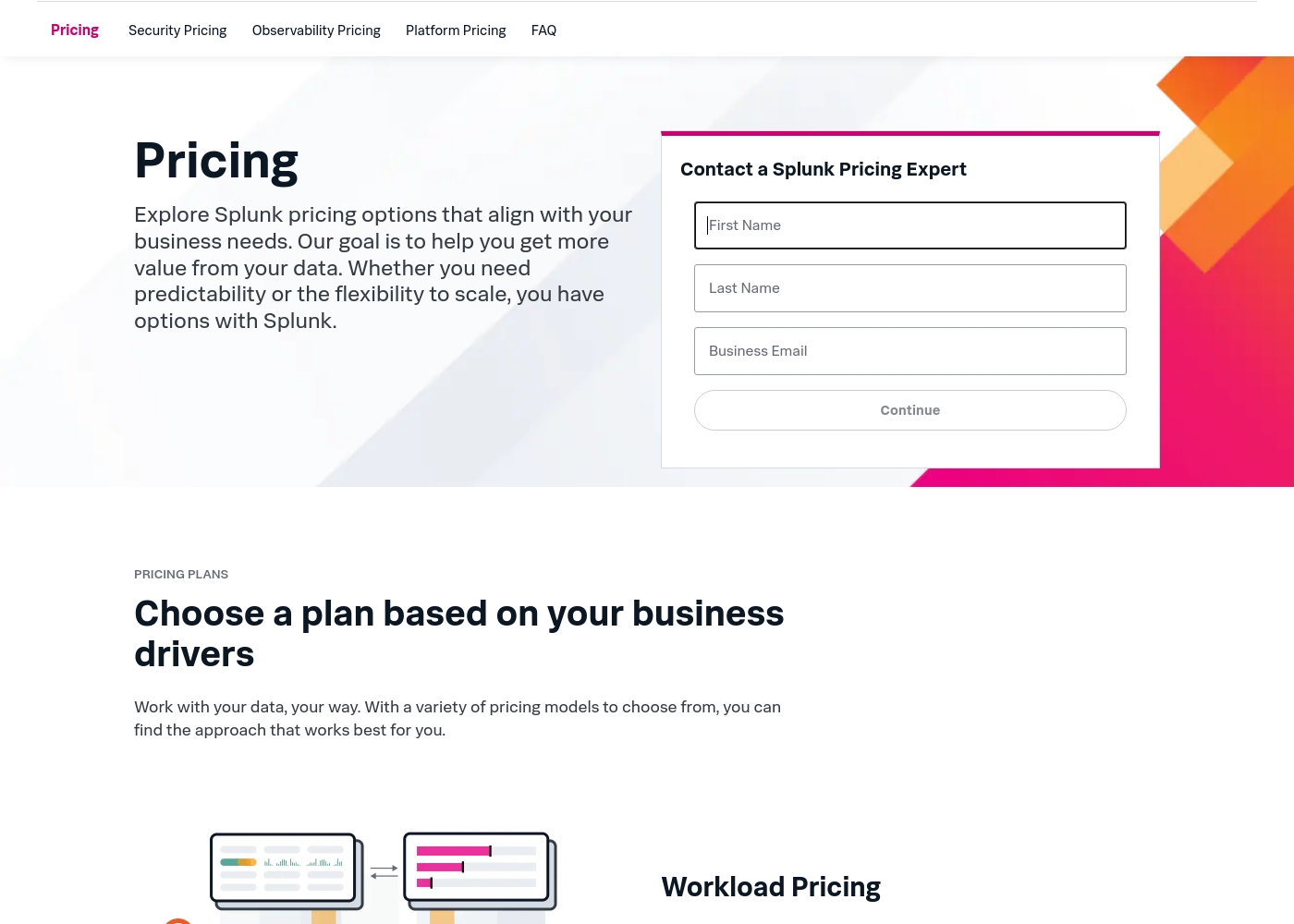
Splunk costs are Not explicitly stated per year with 2 plans: Ingest Pricing at Not explicitly stated, Activity-based Pricing at Not explicitly stated.
Take a look at the different ways you can manage your data costs below.
Ingest Pricing
Price: Not explicitly stated Websites Supported: Not explicitly stated Best For: Teams needing predictable costs for high-volume data ingestion Refund Policy: Not explicitly stated Other Features: Simple predictable approach, Economical search scaling, Broad data ingestion
- Search and analyze machine data
- Expanded use cases on ingested data
- Standard data ingestion
- Metric time series (MTS)
- Traces analyzed per minute
- Sessions monitoring
- Uptime requests
Pricing Notes
- IFTTT has a clear, public pricing structure. Splunk requires a sales consultation for quotes.
- IFTTT's Free plan is limited to 2 Applets. Splunk offers a free trial but no permanent free tier.
- IFTTT's costs are predictable per user. Splunk's costs scale with data volume or activity, which can be variable.
- Both offer free trials for their paid features, allowing you to test before committing.
Pricing Head-to-Head
사용자 리뷰
IFTTT에 대한 외부 피드백은 특히 중요한 가격 개혁 이전에 플랫폼을 경험했던 기존 고객들 사이에서 극심한 사용자 불만을 보여줍니다. 신뢰성이 핵심 이슈이며, 많은 사용자가 앱릿이 매우 신뢰할 수 없고 실패하거나 심지어 몇 시간까지 지연되는 문제를 겪고 있다고 보고합니다.
가장 빈번한 불만은 공격적인 상업 모델로의 전환에 관한 것입니다. 사용자들은 무료 요금제의 앱릿 제한이 단 두 개로 크게 줄어들어 불필요하게 유료 티어로 밀려나고 있으며 이를 너무 비싸다고 느끼고 있습니다.
이 서비스는 훌륭할 수 있지만 안타깝게도 현재는 매우 신뢰할 수 없습니다. 트리거가 올바르게 작동하지 않고 지연 시간이 늘어나서 실행되는 데 몇 시간이 걸릴 정도입니다. 지연이 아닌 안정적인 자동화가 필요합니다.
Based on the provided external sources, we couldn't retrieve detailed user reviews for Splunk due to access restrictions. Trustpilot and Capterra both returned verification or security pages, preventing us from gathering specific sentiment on accuracy, ease of use, support, or pricing.
This means our review is based solely on the official product information and pricing details provided. We recommend checking these review sites directly for the latest user feedback before making a decision.
우리의 판정
This isn't a close contest. IFTTT and Splunk are for completely different jobs. IFTTT is your friendly app connector. Splunk is your powerful data analyst. IFTTT's superpower is simplicity. It connects over 900 services like Google Calendar and Twitter. You can automate daily tasks in minutes without writing code. Splunk's superpower is deep analysis. It ingests data from over 2,000 sources across your entire tech stack. It helps security and IT teams find problems and stop threats. The deciding factor is your core need. Choose IFTTT to automate simple tasks between your favorite apps. Choose Splunk to understand and protect complex IT systems. For everyday app automation, IFTTT is the clear winner. For enterprise data analytics and security, Splunk is the professional standard. They serve different worlds.
자주 묻는 질문
Which is better for a small team: IFTTT or Splunk?
For a small team needing simple automations, IFTTT is better. It's affordable and easy to use. Splunk is designed for larger teams with complex data analysis needs.
Can I use Splunk for simple app automations like IFTTT?
No, Splunk is not designed for simple app-to-app automations. It's a data analytics platform. Use IFTTT for tasks like posting to social media or getting weather alerts.
Is Splunk worth the cost for a small business?
Splunk is typically too expensive and complex for small businesses. Its value is for organizations with significant IT infrastructure to monitor. IFTTT offers a more cost-effective solution for small teams.
Does IFTTT have security features like Splunk?
No, IFTTT is an automation tool, not a security platform. It doesn't analyze logs or detect threats. Splunk is built specifically for security and observability use cases.
How do the mobile apps compare?
Both have solid mobile apps. IFTTT's app manages your automations. Splunk's app lets you monitor systems and respond to alerts on the go. They serve different purposes.
Which tool has better customer support?
Support details vary. IFTTT lists tiered support for paid plans. Splunk's enterprise support details require contacting sales. Both have options, but Splunk likely offers more robust plans for larger deployments.
선택할 준비가 되셨나요?
두 도구 모두 강점이 있습니다. 특정 요구 사항에 따라 선택하세요.