Demodesk vs Drip
Demodesk and Drip are both automation tools, but they solve very different problems. Demodesk is for sales teams capturing conversations and automating admin. Drip is for e-commerce brands automating email marketing. Your choice depends on whether you're selling directly or marketing to customers.
AI-powered sales efficiency with a learning curve.
We found Demodesk offers a promising AI-driven solution to automate sales admin and provide conversation insights. Its core value lies in freeing up time for revenue-generating activities. However, our assessment is limited by a lack of accessible external user reviews to validate its real-world impact on support, reliability, and overall value for money. Overall, it's a compelling tool for teams focused on automating workflows, but further due diligence on user feedback is recommended before committing.
Vorteile
- Automates note-taking, follow-up emails, and CRM updates.
- Provides personalized coaching feedback after calls.
- Captures and analyzes conversations from various channels, not just formal meetings.
- Offers AI agents for building autonomous sales workflows.
Nachteile
- Specifics on integration reliability and depth are unclear without user reviews.
- Ease of use and onboarding experience are unverified externally.
- Pricing beyond the starting tier and its value perception are unknown.
- No accessible user feedback on customer support responsiveness.

Powerful for e-commerce, but check the support.
We find Drip to be a highly capable email automation platform built specifically for B2C e-commerce. Its visual builder and smart segmentation are standout features for creating personalized customer journeys. Overall, it's a strong choice for online brands, provided your team can manage the learning curve and verify support levels.
Vorteile
- Excellent visual workflow builder for automation
- Deep e-commerce integrations (Shopify, WooCommerce)
- Powerful, behavior-based segmentation tools
- Free migration for large lists (17,500+)
Nachteile
- Pricing can become expensive as contacts scale
- Some users report slow or inconsistent customer support
- Requires integration with compatible platforms
- Advanced features may have a learning curve
ÜberDemodesk
✨ Demodesk is a platform with AI sales agents. It's built for sales teams and their managers. The AI listens to conversations, writes notes, and studies what was said. This gives you back your time and clear insights into every deal.
ÜberDrip
Drip is an email marketing automation platform built for B2C companies that sell online. Whether you're an e-commerce brand, a course creator, or a travel provider, it gives you the tools to move beyond generic newsletters. It's designed to be a powerful yet simple engine for driving revenue through personalization. 💡
Highlights
Funktionsvergleich
Funktionsübersicht
Wir heben die Hauptunterschiede hervor und wählen einen Gewinner für jede Funktion.
Automation
Demodesk automates sales admin tasks, while Drip automates email marketing journeys.
Demodesk uses AI sales agents to automate post-call work. It writes notes, drafts follow-up emails, and updates your CRM. This frees up hours each week for your team to focus on selling. Drip's automation focuses on email sequences. It uses workflow templates for tasks like abandoned cart recovery and new customer onboarding. You build a sequence once, and it runs automatically for every relevant contact. The key difference is the target. Demodesk automates the seller's internal workflow. Drip automates the buyer's email journey. They serve opposite sides of the sales funnel. For a sales rep, Demodesk's automation is the game-changer. For a store owner, Drip's automated emails drive the revenue.
User Interface
Demodesk focuses on conversation capture simplicity, while Drip emphasizes a visual email builder.
Demodesk's interface is built to capture and analyze conversations from various sources. It aims to be unobtrusive during calls and intuitive for reviewing AI-generated notes and insights. Drip features a visual email builder. It's designed to let marketers create professional-looking emails in minutes without needing a developer. The focus is on design and ease of campaign creation. You're comparing a conversation analysis dashboard to a design studio. They look and feel completely different because they do completely different jobs. A sales manager reviewing call insights in Demodesk is having a different experience than a marketer designing a welcome series in Drip's visual builder.
Reporting & Analytics
Demodesk provides conversation and deal insights, while Drip offers campaign performance data.
Demodesk analyzes captured conversations to provide sales insights. It helps managers see deal health and team performance based on actual talks. The data is about sales activity and coaching. Drip provides standard email marketing analytics. You track open rates, click-through rates, and conversion from campaigns. It also shows how segments are performing. Demodesk's analytics are about sales process optimization. Drip's are about marketing campaign effectiveness. They answer different business questions. Choosing between them depends on whether you need to optimize your sales team's calls or your email marketing's ROI.
Pricing Model
Demodesk charges per user and usage, while Drip charges based on contact list size.
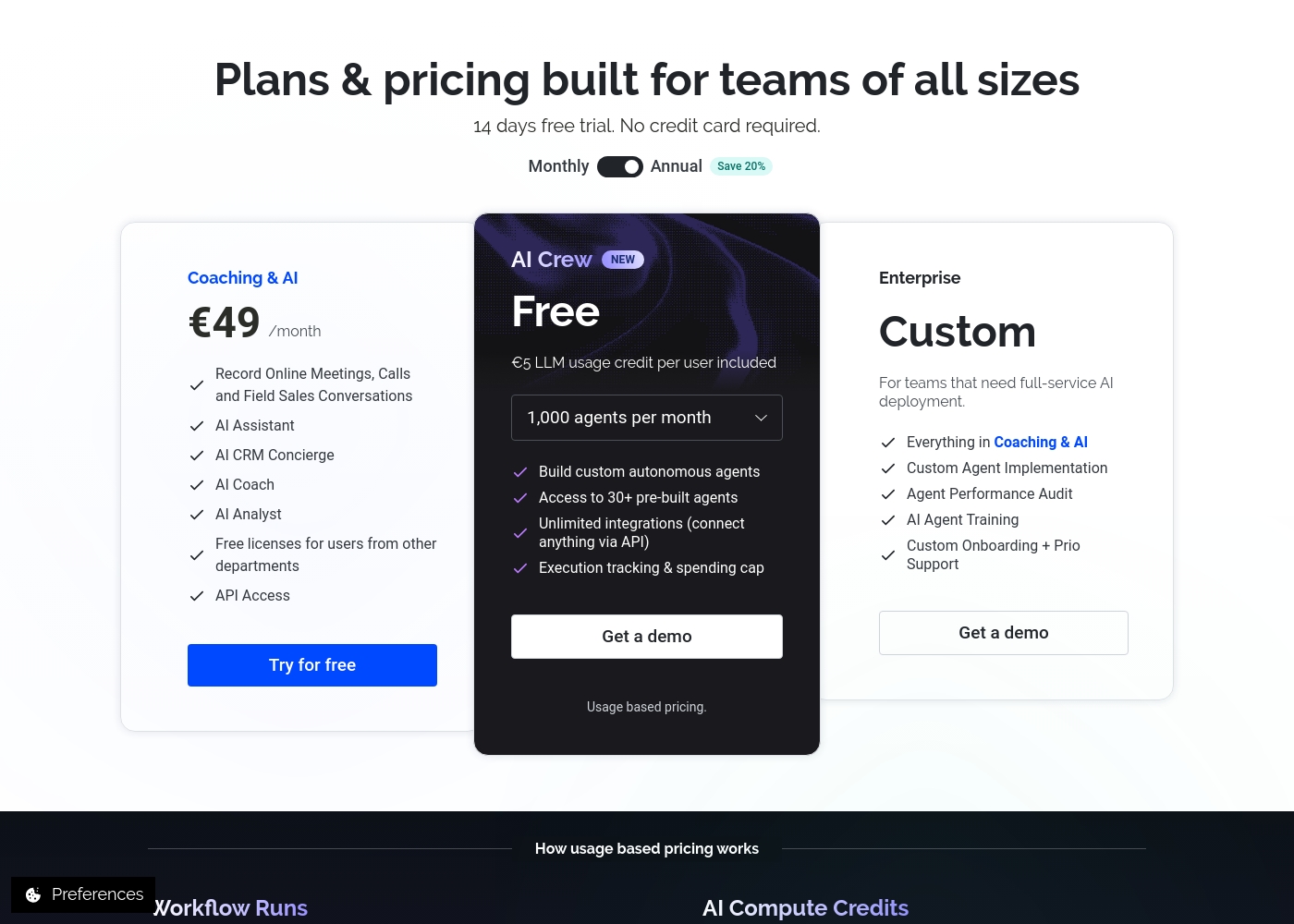
Demodesk has a per-user pricing model starting at €49/month for the Coaching & AI plan. There's also a free 'AI Crew' tier with usage-based charges for workflow runs. Cost scales with team size and activity. Drip's pricing is purely usage-based. It starts at $39/month for up to 2,500 contacts. Your cost increases as your email list grows. There are no per-user fees. The biggest difference is what you're paying for. Demodesk charges for each salesperson. Drip charges for the size of your audience. A 10-person sales team at Demodesk will have a very different cost structure than an e-commerce store with 50,000 contacts at Drip.
Integration Ecosystem
Demodesk offers unlimited integrations on its free tier, while Drip has 50+ specific e-commerce integrations.
On its free AI Crew plan, Demodesk offers unlimited integrations and API access. This suggests broad connectivity, but specific pre-built integrations aren't listed on their site. Drip boasts over 50 integrations. It connects directly with major platforms like Shopify, BigCommerce, WooCommerce, and various LMS tools. These are deep, specific connections for e-commerce. Demodesk's strength is flexible, open connectivity. Drip's strength is deep, out-of-the-box connections for online stores. If you need to connect to a niche sales tool, Demodesk's API might be better. If you need seamless Shopify integration, Drip's pre-built connector is ready to go.
Customer Support
Demodesk's support details are unclear, while Drip advertises fast email and chat responses.
Information on Demodesk's general customer support is limited. Only its Enterprise plan explicitly mentions 'Prio Support.' Responsiveness and channels aren't detailed for other plans. Drip provides email support to all paying customers. Plans costing $99/month or more get live chat support. They report a 97.3% satisfaction score and quick response times. Drip is transparent about its support structure and metrics. Demodesk's support offering appears less defined outside of enterprise. For a small business wanting guaranteed access to support, Drip's published details are more reassuring.
Learning Curve
Both aim to be user-friendly, but for different tasks: conversation capture vs. email design.
Demodesk is designed to automate and simplify admin. The learning curve involves connecting tools and understanding AI-generated insights and coaching. The goal is to reduce workload. Drip's learning curve centers on its visual builder and workflow logic. You need to learn how to design emails and set up automation triggers. Templates help, but it's still a marketing skill. Demodesk aims to be plug-and-play for sales. Drip requires some marketing setup know-how. Neither is overly complex, but they require learning different systems. A sales rep can get productive quickly with Demodesk. A marketer will need time to build effective Drip campaigns.
Customization
Demodesk customizes through AI coaching and workflows; Drip customizes via email design and automation logic.
Demodesk's customization lies in its AI coaching feedback and potentially configurable workflow agents. It adapts to your sales conversations and processes. Drip's customization is deep. You can fully design emails, build multi-step automation workflows, and create detailed customer segments. The platform is built for tailored marketing journeys. Demodesk customizes the sales support experience. Drip customizes the entire customer email communication experience. The depth and scope of customization are greater in Drip for its purpose. The ability to tweak every email and automation path makes Drip highly customizable for marketing teams.
Security
Demodesk's security details are not public, while Drip states compliance with major standards.
For Demodesk, specific security protocols and data handling practices are not listed on the public website. Users would need to request details from sales. Drip explicitly states it follows GDPR, CAN-SPAM, and other compliance standards. It also mentions deliverability experts to ensure emails reach inboxes. Drip provides clear information on compliance. Demodesk leaves this information for private conversations. For businesses with strict compliance requirements, Drip's public stance is a clear starting point.
Mobile Experience
Demodesk enables capturing conversations from a phone; Drip's mobile experience is unspecified.
A key feature of Demodesk is capturing spontaneous sales conversations, which it highlights can be done from your phone. This implies a functional mobile experience for logging chats. Drip does not specify details about a mobile app or experience. Its focus is on the desktop-based visual builder and dashboard. Demodesk explicitly supports mobile data capture for sales. Drip does not emphasize mobile functionality for marketers. For a salesperson who needs to log a hallway chat on the go, Demodesk's mobile capability is critical.
Scalability
Demodesk scales with users and workflow runs; Drip scales with contact list size and email volume.
Demodesk scales by adding more users and handling increased usage of its workflow agents. The free tier has usage-based pricing for automation runs. Drip scales as your audience grows. Its pricing tier increases with the number of active contacts. It supports unlimited email sends on paid plans. Demodesk scales with your sales team's size and activity. Drip scales with the size of your marketing audience. Both models are usage-based but measure different things. A growing sales team might see costs rise with Demodesk. A growing email list will directly increase costs with Drip.
Demodesk pricing: Demodesk offers a flexible pricing model starting at €49/month per user, alongside a free AI Crew tier for building autonomous agents. The platform scales based on feature requirements and usage-based workflow runs.
building autonomous agents. The platform scales based on feature requirements and usage-based workflow runs.
building autonomous agents. The platform scales based on feature requirements and usage-based workflow runs.
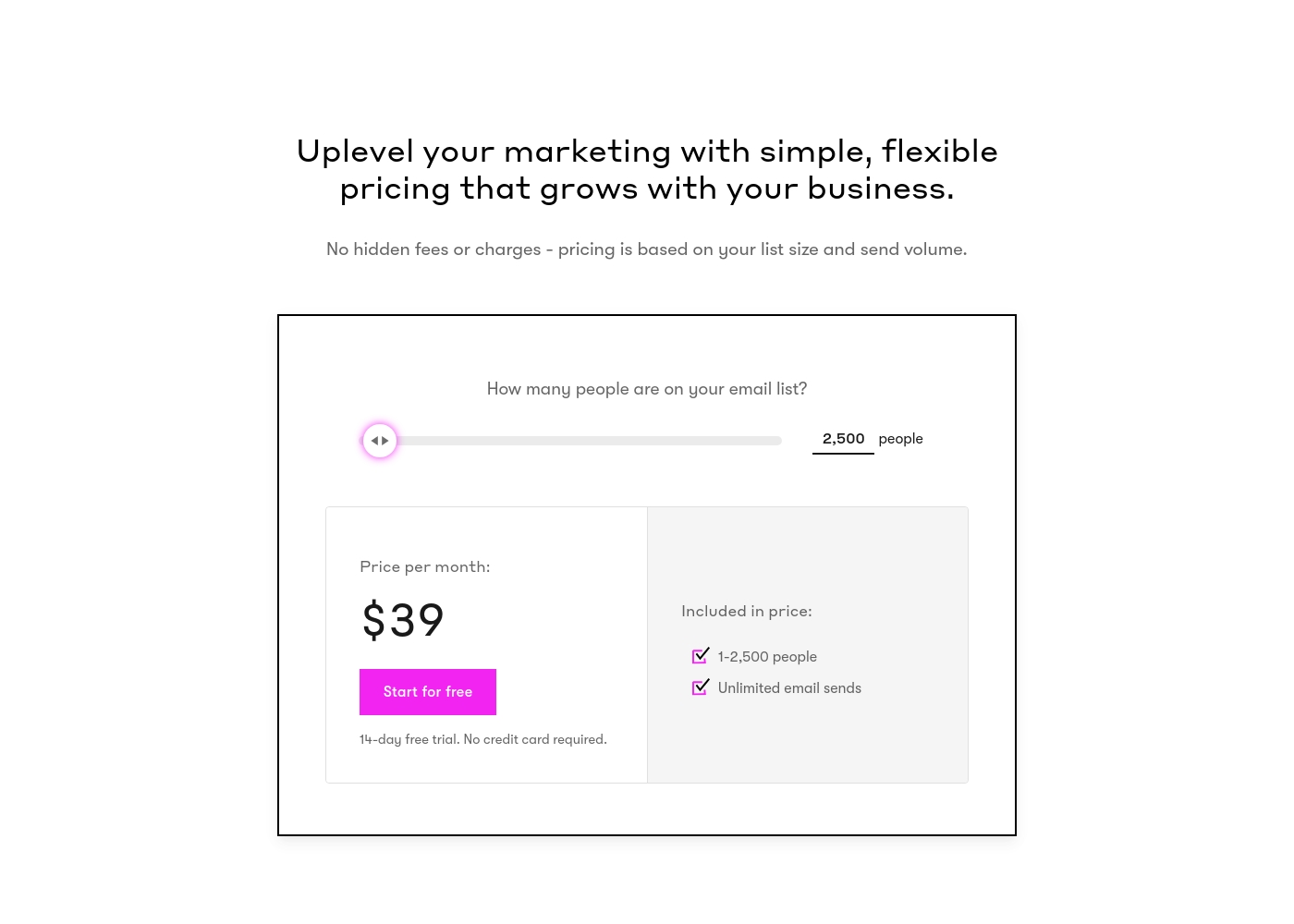
Drip pricing: Drip offers a flexible, usage-based subscription starting at $39/month for up to 2,500 people. Pricing scales based on your email list size and includes a 14-day free trial with no credit card required to start browsing its powerful automation tools tool and visual builder.
Your monthly cost increases as your audience grows, but you always get features like unlimited email sends and onsite campaigns. This ensures you only pay for what you actually use while accessing expert support and pre-built marketing playbooks right from the start.
You can cancel your subscription at any time within your billing settings if your business needs change. This model is specifically designed for e-commerce brands looking for deep segmentation and personalized customer journeys without enterprise-level complexity or hidden fees.
Pricing Notes
- Demodesk has a free 'AI Crew' tier (per-seat free, but usage-based charges for runs). The Coaching & AI plan starts at €49/user/month.
- Drip's free plan supports up to 2,500 contacts. Paid plans start at $39/month for the same contact limit.
- Drip's pricing can become expensive as your contact list grows significantly.
- Demodesk's pricing is per-user, making costs predictable for a fixed team size.
- Both offer a 14-day free trial with no credit card required.
Pricing Head-to-Head
Nutzerbewertungen
Based on our review of external sources, we were unable to access user reviews on Trustpilot or Capterra for Demodesk. The Capterra link returned a security error, preventing us from gathering specific sentiment on accuracy, ease of use, support, or pricing.
Without accessible review data, we cannot synthesize a balanced external summary at this time. We recommend checking these platforms directly for the latest user feedback.
We reviewed Demodesk's website and found a clear focus on automating sales admin. The promise of capturing conversations anywhere is strong, but without user reviews, we can't confirm how well it delivers. The AI agents feature is intriguing for advanced workflows.
We found a mixed bag of user sentiment from Trustpilot, as the Capterra link was inaccessible. Reviews praise Drip's powerful automation and segmentation for driving revenue, with many noting its ease of use for e-commerce.
💡 On the downside, several users report frustration with customer support responsiveness and occasional platform glitches. Pricing is frequently cited as a concern, with some feeling the cost can escalate quickly as contacts grow.
Drip's automation tools are top-notch. We set up abandoned cart sequences that really boosted our recovery rate. The visual builder makes it easy to see the customer journey.
Unser Fazit
This isn't a straightforward apples-to-apples comparison. Demodesk and Drip are powerful tools solving different business problems. Demodesk's superpower is automating the sales admin nightmare. It uses AI to capture conversations, write notes, and coach your team. If you're a sales manager, it's like adding a dedicated admin and coach to every rep. Drip's superpower is turning email marketing into a revenue machine. Its visual builder and smart segments help e-commerce brands recover lost sales and nurture customers automatically. For online stores, it's the engine behind many successful campaigns. The deciding factor is your core challenge. Do you need to capture sales conversations and reduce manual work for your team? Demodesk is built for that. Or do you need to automate personalized emails to drive more sales from your website visitors? Drip is your tool. Choose Demodesk if you're a sales team or manager focused on improving conversations and automating follow-ups. Choose Drip if you're an e-commerce brand, course creator, or B2C marketer ready to power up your email strategy.
Häufig gestellte Fragen
Which is better for small teams: Demodesk or Drip?
It depends on the team's role. For a small sales team, Demodesk can automate admin and provide coaching. For a small e-commerce business, Drip's free plan and automation can drive sales. They serve different team types.
Does Demodesk have email marketing features like Drip?
Demodesk includes follow-up email drafting and sending as part of its sales automation. However, Drip is a dedicated email marketing platform with a visual builder, segmentation, and campaign tools. Drip's email features are more comprehensive.
Is Drip worth the extra cost over Demodesk?
The cost comparison isn't direct, as they are per-user vs. per-contact. Drip is worth it if your business is e-commerce and email automation drives significant revenue. Demodesk is worth it if it saves hours of admin time for your sales team.
Can I migrate from Demodesk to Drip easily?
Migration would involve moving sales workflow data to an email marketing platform. Drip offers free migration for lists over 17,500 contacts, but this applies to email contacts, not sales conversation data. They are not direct replacements.
What's the main difference between Demodesk and Drip?
Demodesk is an AI sales platform that automates note-taking, CRM updates, and coaching from conversations. Drip is an email marketing automation platform for B2C brands to create automated email journeys. Their core purposes are different.
Do both tools offer a free trial?
Yes. Both Demodesk and Drip offer a 14-day free trial. Neither requires a credit card to start the trial.
Bereit zu wählen?
Beide Tools haben Stärken. Wähle passend zu deinem Bedarf.